
LOCAL GUIDE · BY CARELLA SICILIA
Palermo isn’t visited.
It’s lived.
The Ballarò market waking up before dawn. The perfect arancina at 7:30. The scent of orange blossom rising from the alleys of the Cassaro. We live here — and we’re here to show it to you.
Discover the city →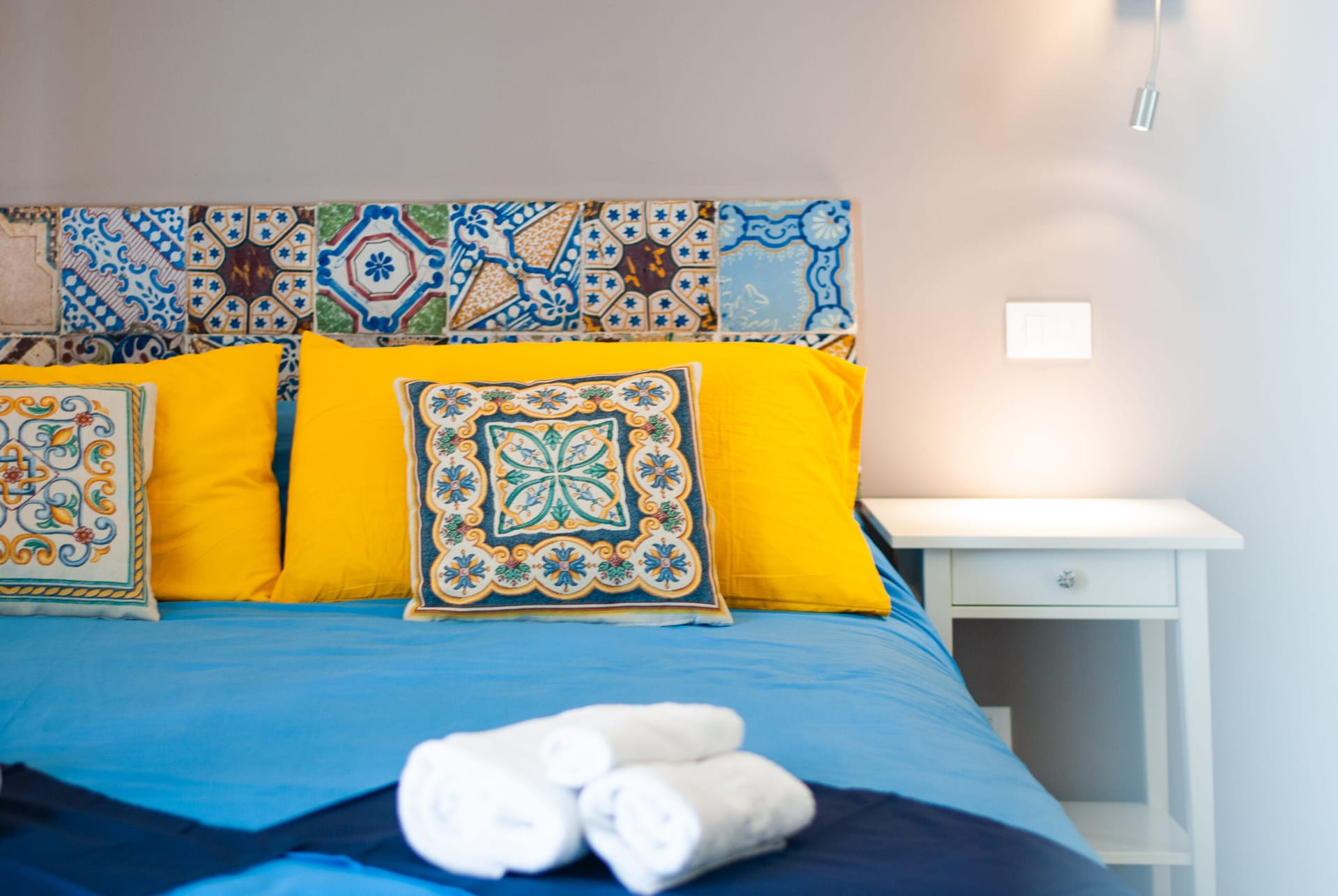
The neighbourhoods to explore
Every Palermo neighbourhood is a world of its own. Four you can’t miss.
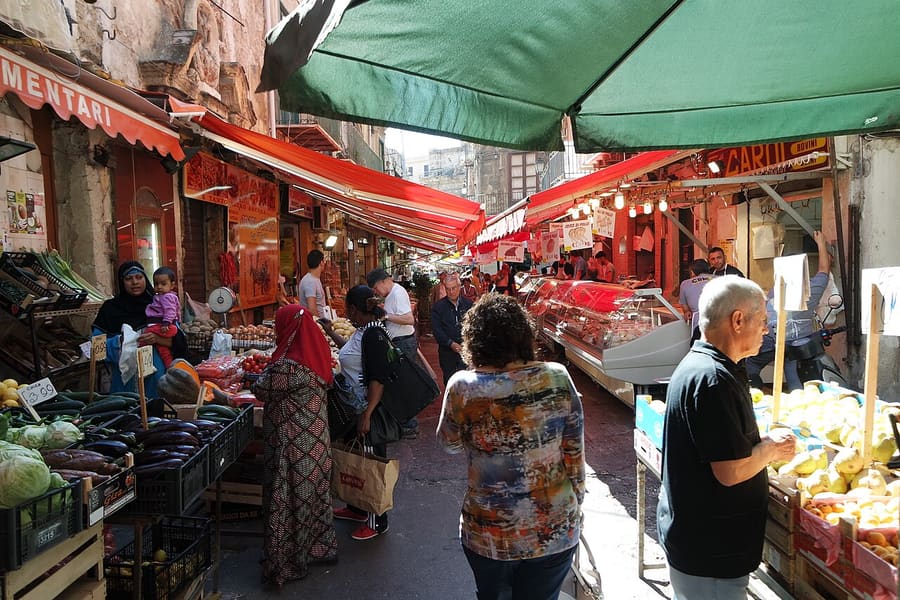
Ballarò
The city’s oldest market, probably the most authentic in all of southern Italy. It wakes at dawn with the voices of vendors, the scent of fresh bread and the colours of spices. Come early in the morning — before 9:00 — to see it at its truest.
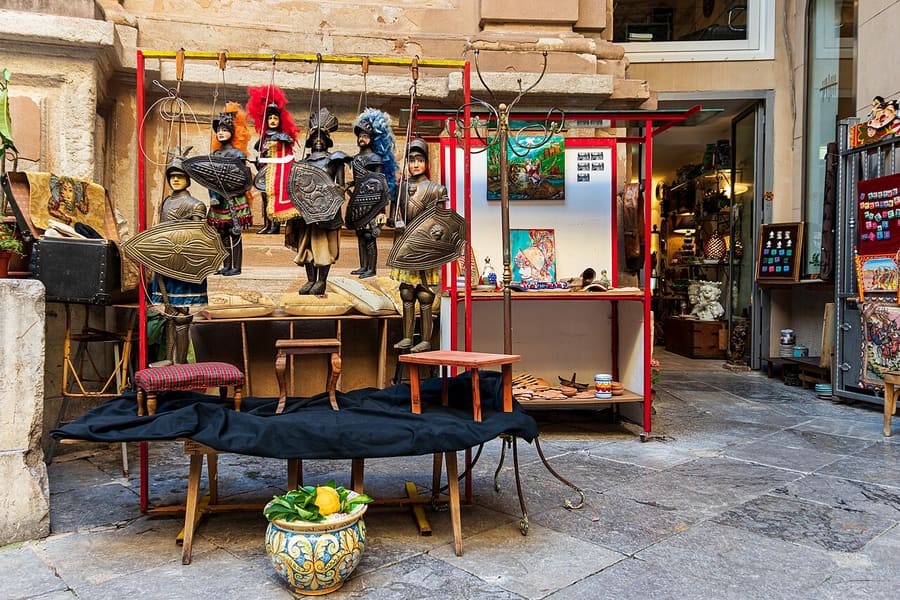
Il Cassaro
Palermo’s main axis, Corso Vittorio Emanuele, runs across the city from Porta Nuova to the Cala. Walking along the Cassaro you cross two thousand years of history: Arab-Norman mosaics, Baroque churches, noble palaces and a varied humanity that tells the island’s complexity.
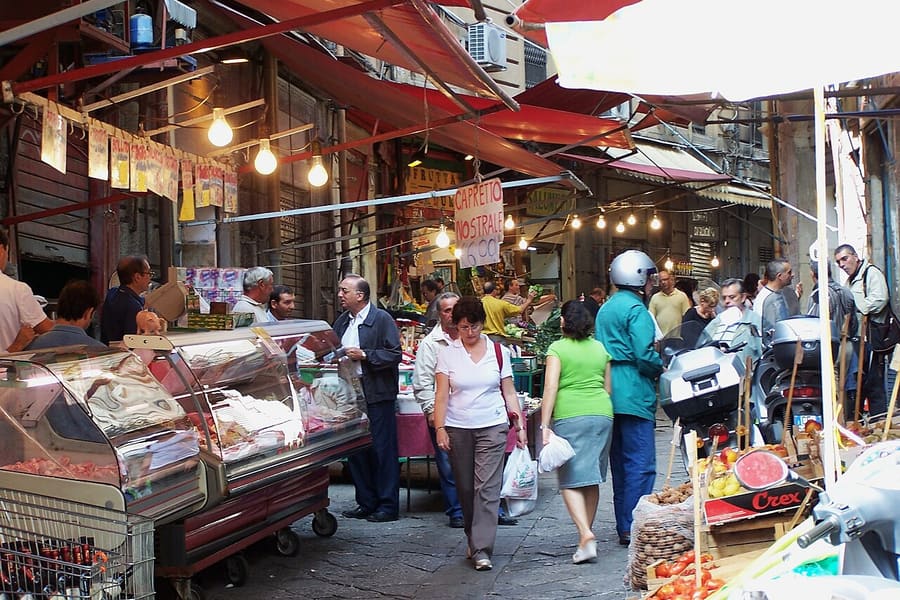
La Vucciria
By day it’s an almost silent historic market, with a few surviving shops. By night it transforms: tables are set on the cobblestones, bottles of house wine circulate, music comes from hidden courtyards. It’s Palermo having fun, unfiltered.
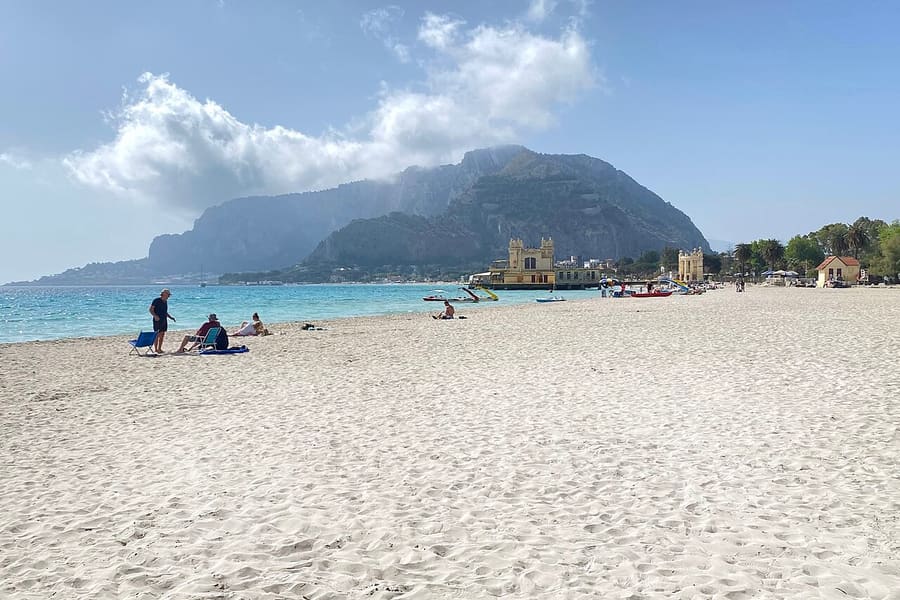
Mondello
The Palermitans’ beach. Fifteen minutes from the centre, framed by the Monte Pellegrino headland, Mondello has white sand and water that shifts from green to turquoise. Perfect for those who want to alternate city and sea — and return to the centre for dinner.
Not to be missed
Six places that make Palermo unique — and none of them is a souvenir shop.
Cappella Palatina
The gold mosaics covering every inch of the walls are among the most beautiful things humankind produced in the Middle Ages. Book in the morning for the best light.
Mercato di Ballarò
It’s not just a market — it’s theatre. Colours, smells, haggling in broad dialect. The most honest place to understand Palermo.
Teatro Massimo
The third-largest opera house in Europe. The neoclassical façade on the square is a show in itself. If you can, attend a performance.
Piazza Pretoria
The 16th-century fountain at the centre — with its nude statues — scandalised the Palermitans of the time so much they called it the "Fountain of Shame". Today it’s one of the city’s symbols.
Palazzo dei Normanni
A thousand years of history in a single palace. Seat of the Sicilian Parliament, it houses the Palatine Chapel and the striking Royal Apartments. Booking recommended.
La Cattedrale
An architectural palimpsest: built by the Arabs on a church, modified by the Normans, finished by the Catalans. The result is a building that exists nowhere else in the world.
The street food
you won’t forget
Palermo is one of the world’s street food capitals. Not thanks to the guidebooks — thanks to centuries of Arab, Norman and Spanish influences that created a street cuisine unlike any other.
Rice, ragù (or butter and ham), fried. In Palermo it’s "arancina" — feminine. Don’t get drawn into the debate with Catania.
Palermo’s pizza: thick, soft, with onion, tomato, anchovies and caciocavallo. Find it at the carts or in the fry shops of the centre.
Veal spleen fried in lard, served in a soft vastedda bun. It’s Palermo’s quintessential street food — you have to try it at least once.
The ricotta goes in on the spot, not before. Be wary of anyone who prepares them in advance. The best cannoli shops in the old town still use sheep’s ricotta from the Sicilian hinterland.
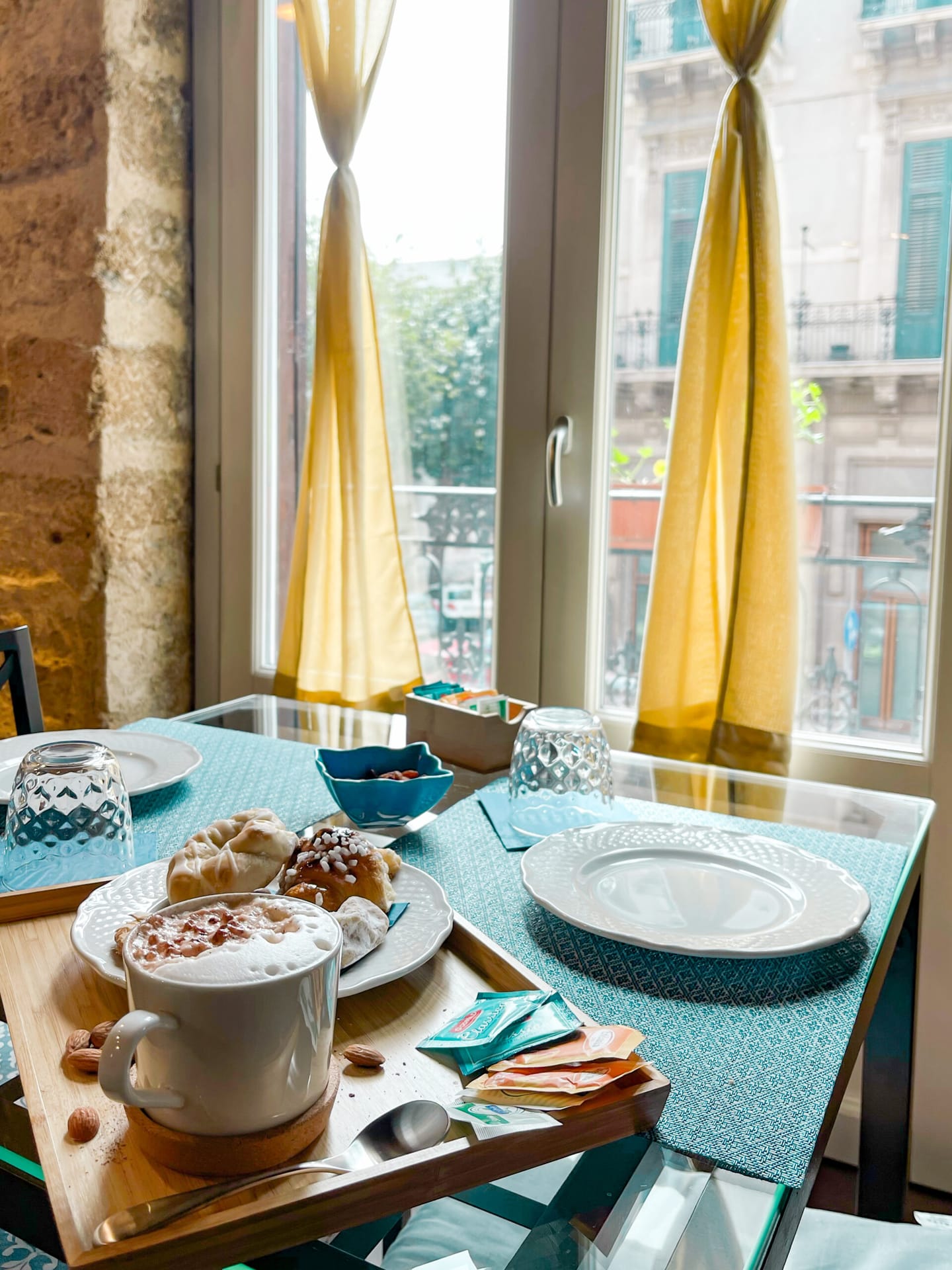
In the morning, with a brioche. It’s not a dessert — it’s breakfast. Essential flavours: almond, lemon, black mulberry. In summer it’s more necessary than air conditioning.
Scraps of veal, slowly cooked and served hot on bread paper. Humble food of very noble origin. You’ll only find it from the street vendors of the centre.
Practical tips
What online guides don’t tell you — or don’t know.
When to come
April–May and September–October: the weather is perfect, the city isn’t overcrowded, prices are more reasonable. July and August are hot (over 35°) but vibrant. Winter is mild and the city goes back to the Palermitans.
Getting around
The historic centre is explored on foot: everything is reachable in 20–25 minutes. For Mondello, Monreale or Cefalù take the AMAT buses or rent a scooter. Taxis are cheap for short trips.
Times and rhythms
Palermo lives at night. Restaurants fill up after 9:00 pm. Markets close in the early afternoon. Churches often close at noon — plan visits in the morning or late afternoon.
Where to really eat
Avoid tourist menus with photos. Look for trattorias without checked tablecloths, places where the menu changes every day, bars frequented only by locals. Ask us: we know the good spots.
The coffee
In Palermo you drink it at the counter, hot and short, without rushing but without lingering too long. The morning always starts with a coffee and a brioche — never a cappuccino after 11:00.
Where we are
Our properties are in two areas of the centre: Via Cavour, 6 minutes from the Teatro Massimo, and Via S. Cristoforo, 5 minutes from the Quattro Canti and 7 from Ballarò. You’ll have everything within walking distance — and us within a WhatsApp message.
Practical guides
How to get here, where to stay, the ZTL and parking, what to see on foot.
Ready for Palermo?
Book one of our properties in the centre of Palermo and you’ll have markets, monuments and the Teatro Massimo within walking distance. And us within a WhatsApp message — with tips, itineraries and everything you need to truly live it.